Finance
Moonshot AI Shops $50 Billion Valuation Ahead of Hong Kong IPO
Final pre-IPO round talks begin in August as Kimi K3's viral launch draws investor frenzy and a White House accusation
5 min read
By Timmy
Moonshot AI is preparing to test investor appetite for a final private funding round at a valuation of as much as $50 billion, a step that would put the Beijing startup at the front of China's artificial intelligence IPO rush. reported on Monday that the company plans to open talks with investors in August, with a Hong Kong listing possible within six months.
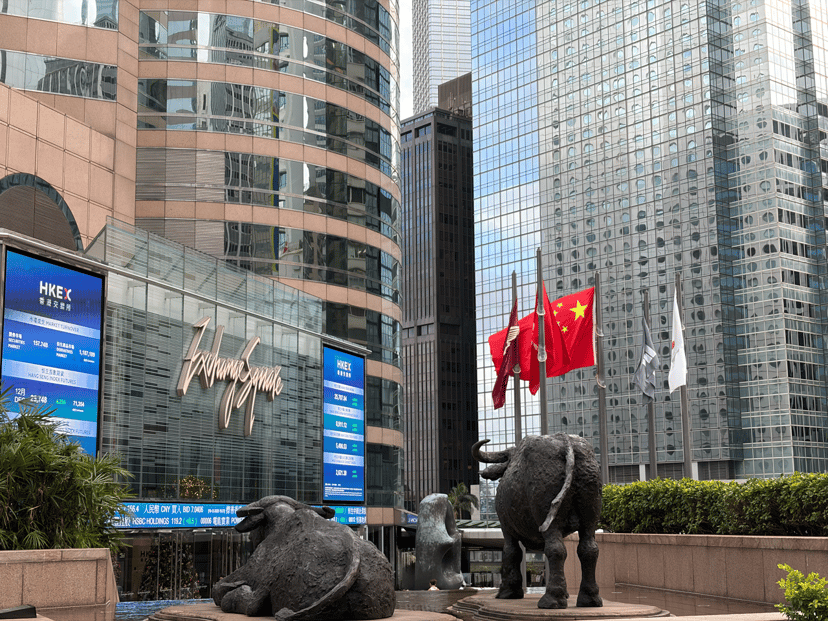
The new round would follow a financing now closing at roughly $31.5 billion, itself a sharp step up from the $20 billion valuation Moonshot commanded in May, when it raised about $2 billion in a round led by Meituan's Long-Z Investments. The company has circulated a resolution asking shareholders to approve a listing on the , and it is working to unwind its offshore red-chip structure before August to clear the regulatory path, Bloomberg reported, citing people familiar with the matter.
The pitch to investors rests on numbers that were unthinkable a year ago. Annual recurring revenue reached $300 million in June, up from $200 million in April and $100 million in the first quarter, according to people familiar with the figures. Daily revenue has jumped at least sixfold since the July 16 launch of , the company's flagship open-weight model.
The launch was popular enough to break things. Within 48 hours, Moonshot suspended new subscriptions after demand pushed against the limits of its computing capacity. "Over the past 48 hours, demand has pushed close to the limits of our current capacity. To protect the experience of existing subscribers, we're temporarily pausing new subscriptions and prioritising compute for current members," the company said in a post on X, adding that it would reopen sign-ups after installing more GPUs and split membership into separate consumer and coding plans.
Kimi K3 carries 2.8 trillion parameters, making it the largest open-weight model released to date, with a context window of one million tokens. Artificial Analysis, an independent benchmarking group, ranks it behind only 's Claude Fable 5 and OpenAI's GPT-5.6 in overall capability, and ahead of both companies' previous-generation models in coding and agentic evaluations. Moonshot says it will publish the model's full weights on July 27. Elon Musk, the chief executive of Tesla and founder of xAI, described the model as "impressive" in a post on X.
Founded in 2023 by Yang Zhilin, a 33-year-old Carnegie Mellon graduate who previously worked at Meta and Google, Moonshot has become one of China's most closely watched AI companies. Its backers include Alibaba, Tencent, IDG Capital, China Mobile and the Beijing AI Industry Investment Fund. The company has engaged China International Capital Corp and Goldman Sachs to work on the potential Hong Kong offering, according to The Straits Times.
The fundraising has already reshaped trading in listed Chinese AI names. Shares of Zhipu AI, which trades in Hong Kong under the ticker 2513.HK, fell 28.5 per cent on July 17, the day after K3's debut, and dropped a further 19.6 per cent on July 20 as news of Moonshot's listing push spread, erasing roughly HK$300 billion in market value before rebounding. Zhipu and MiniMax, which listed on January 9, had been the only two pure-play large language model companies on the Hong Kong exchange, a scarcity that once pushed Zhipu's market capitalisation to HK$1 trillion.
Moonshot is not alone in racing toward the public markets. has held talks about a listing on Shanghai's STAR Market at a pre-money valuation of $71 billion to $74 billion, The Wall Street Journal and Bloomberg have reported, with a filing targeted for this year.
The momentum has arrived alongside an extraordinary accusation from Washington. "We have information that Moonshot AI distilled Anthropic's Fable for the development of its K3 model," Michael Kratsios, director of the White House Office of Science and Technology Policy, wrote in a post on X, adding that "large-scale, covert industrial distillation aimed at stealing proprietary U.S. technology and undermining American research is unacceptable."
Treasury Secretary Scott Bessent went further, warning of trade restrictions. "We support open-source AI and the innovation it unlocks. But open source is not open season on American IP," Bessent wrote on X. "When PRC firms conduct covert, industrial-scale distillation attacks that cross the line into IP theft, sanctions and Entity List designations will be on the table." Moonshot did not immediately respond to requests for comment on the accusations.
Not everyone in Washington read the launch as a threat. David Sacks, the White House AI and crypto adviser, wrote on X that "America is tying itself in knots" with data centre restrictions and proposed federal model approvals. Dean Ball, who leads strategy at OpenAI, took the opposite view, warning that releasing such a capable model as open-weight pushes the industry toward what he called "full AI communism."
For now, investors appear willing to look past the politics. If the August talks price Moonshot anywhere near $50 billion, the figure would exceed the current market value of Zhipu and set the benchmark for every Chinese AI listing that follows. Public markets on both sides of the Pacific are about to price frontier AI at the same time, and the levels struck this quarter will anchor the industry for years.