Finance
Cathay Pacific 2026 interim results: profit jumps 71% to HK$6.24 billion, dividend up 30%
Cathay Pacific H1 2026 Profit Jumps 71% to HK$6.24 Billion
5 min read
By Timmy
The Cathay Group reported a first-half attributable profit of HK$6,243 million in its 2026 interim results, up 71% from a year earlier, and raised its first interim dividend 30% to HK26 cents per ordinary share even as jet fuel costs surged in the second quarter.
Key figures at a glance
Metric | H1 2026 | H1 2025 | Change |
|---|---|---|---|
Revenue | HK$68,061M | HK$54,309M | +25.3% |
Attributable profit | HK$6,243M | HK$3,651M | +71.0% |
Earnings per share | HK99.5 cents | HK56.7 cents | +75.5% |
First interim dividend | HK26 cents | HK20 cents | +30.0% |
Fuel costs | HK$23,224M | HK$14,654M | +58.5% |
Passengers carried | 16.0M | 13.6M | +17.5% |
Revenue rose 25.3% to HK$68,061 million for the six months ended June 30, the Hong Kong carrier said in a filing to the stock exchange. Earnings per ordinary share were HK99.5 cents, against HK56.7 cents a year earlier.
The dividend will be paid Oct. 8 to shareholders on the register as of Sept. 4. The shares trade ex-dividend from Sept. 2.
The result included HK$1 billion of non-recurring gains, mainly a non-cash deemed partial disposal gain of about HK$1.4 billion. That gain arose when the group's stake in Air China Ltd. was diluted to 12.85% from 15.09% after Air China issued new shares in June.
Excluding associates, Cathay's airlines and subsidiaries earned HK$4,880 million, up from HK$3,832 million. Associates, most of which are recognized three months in arrears, contributed HK$410 million, reversing a HK$181 million loss a year earlier. That swing was driven largely by Air China, which deployed more capacity and improved yields.
Why Cathay's fuel bill jumped 59%
The half divided sharply into two quarters. Fuel prices climbed after tensions escalated in the Middle East, and the group's fuel bill including hedging rose 58.5% to HK$23,224 million.
"Having got off to a strong start in the first quarter, we faced a more challenging second quarter due to the situation in the Middle East and the resulting significant increase in jet fuel prices," Chair Guy Bradley said in the results statement. "This resulted in our jet fuel costs almost doubling from the first quarter to the second quarter."
The airline raised passenger and cargo fuel surcharges to offset part of the increase, Bradley said. Non-fuel costs at the flagship carrier rose 13.1% to HK$35,674 million. Cost per available tonne kilometre including fuel rose 18% to HK$3.87, but only 5.2% excluding fuel.
"That we were able to achieve our first-half performance despite these circumstances is testament to the resilience we have built into our business in recent years," Bradley said.
Cathay Pacific, Cathay Cargo and HK Express performance
Cathay Pacific passenger revenue rose 26.3% to HK$43,203 million on an 11.8% increase in seat capacity. The airline carried 16 million passengers, about 88,400 a day and 17.5% more than a year earlier. Load factor reached 87.5%, and yields rose 9.4%.
Part of that lift came from disruption elsewhere. Travelers rerouted away from Middle East hubs pushed more transit traffic through Hong Kong, particularly on Europe to Oceania itineraries. Cathay suspended its Dubai and Riyadh passenger and freighter services in March.
Cathay Cargo revenue rose 23.9% to HK$13,806 million, with tonnage up 8.5% to 869,000 tonnes and yields up 18.1%. The division cited demand for high-value technology shipments tied to data centre construction and the artificial intelligence buildout.
HK Express, the group's low-cost carrier, narrowed its loss before net finance charges and taxation to HK$73 million from HK$524 million. Passenger revenue rose 37.8% to HK$4,139 million. Air Hong Kong, the cargo affiliate, earned HK$481 million, roughly flat.
Fleet plans: HK$150 billion committed, 150 new aircraft targeted
Cathay said it has committed about HK$150 billion to its fleet, cabin and lounge products, and digital innovation. Over the next 10 years it is targeting 150 new aircraft and a network of 150 destinations, subject to market conditions.
The group operated 235 aircraft at the end of June with 105 on firm order, including 35 Boeing 777-9s, 30 Airbus A330-900s and eight A350F freighters. It also holds rights to acquire 87 more.
Cathay Pacific launched a five-times-weekly Seattle service in March and plans to begin flying to Almaty in the first quarter of 2027, its first destination in Central Asia. It is retrofitting more Boeing 777-300ERs with its Aria Suite and will introduce an Aria Studio Business class cabin on regional Airbus A330s by year-end. Some Economy seats are being removed from A321neo aircraft to add legroom.
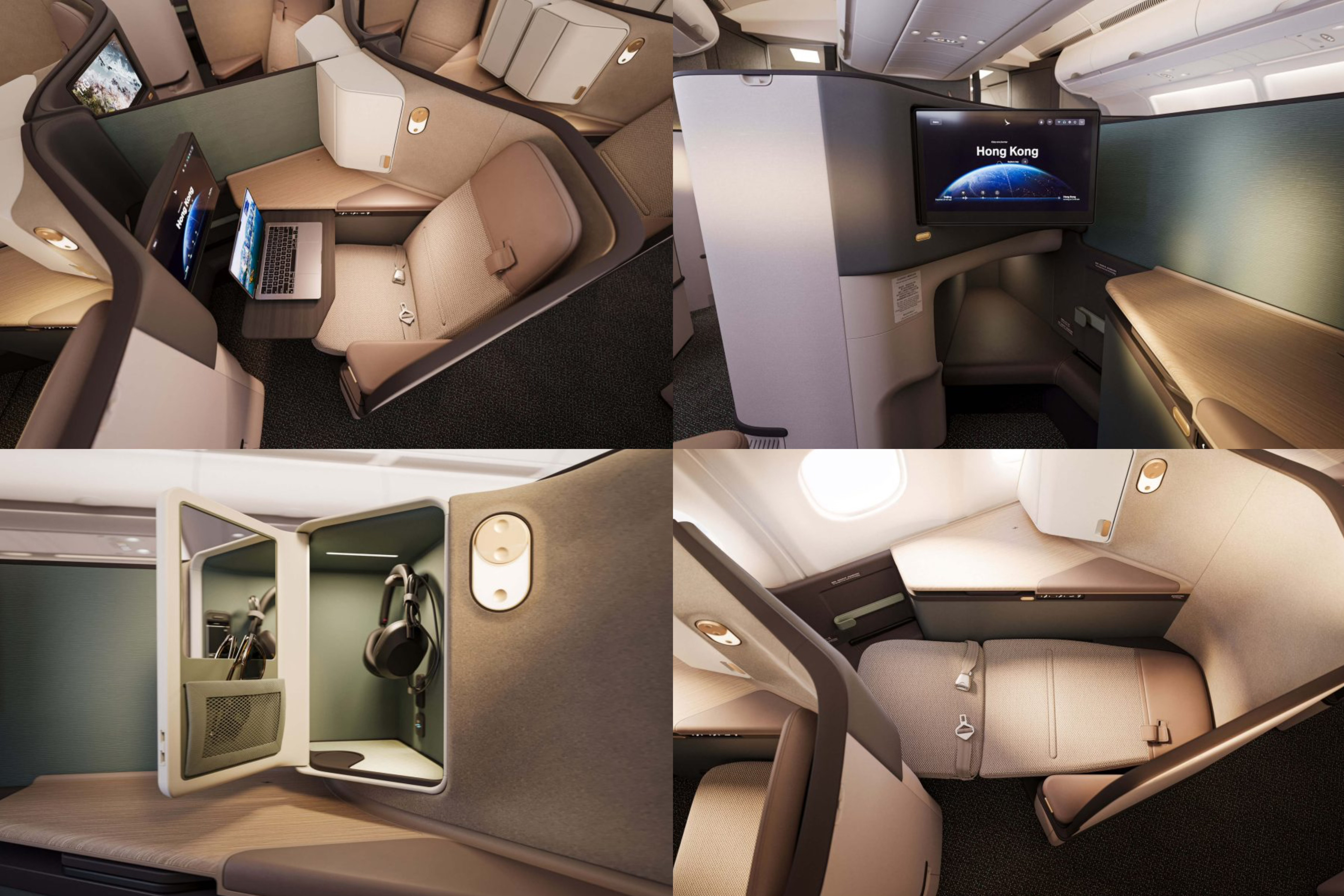
The airline will open its first New York lounge in the redeveloped Terminal 6 at John F. Kennedy International Airport, scheduled to open later this year.
On the balance sheet, available unrestricted liquidity stood at HK$23,575 million at June 30, down 5.5% from December. Net borrowings were HK$47,267 million and the net debt-to-equity ratio was 0.81 times. Cathay completed the buyback of Qatar Airways' stake in February and raised HK$2.88 billion in its first Hong Kong dollar bond issuance in April.
Bradley said summer demand entering the third quarter looks strong and the group remains on track for roughly 10% passenger capacity growth in 2026. He cautioned that fuel prices have started rising again.
"We expect the impact of elevated fuel prices will continue for the rest of the year," he said.
The results come as Cathay marks its 80th anniversary and Bradley's first set of interim figures as chair.