Global News
Francis Halzen wins the 2026 Nobel Prize in Physics for IceCube, the neutrino telescope buried under the South Pole
3 min read
By Timmy
He spent almost 40 years building a detector out of Antarctic ice. A team from Chiba University was behind some of its biggest finds.
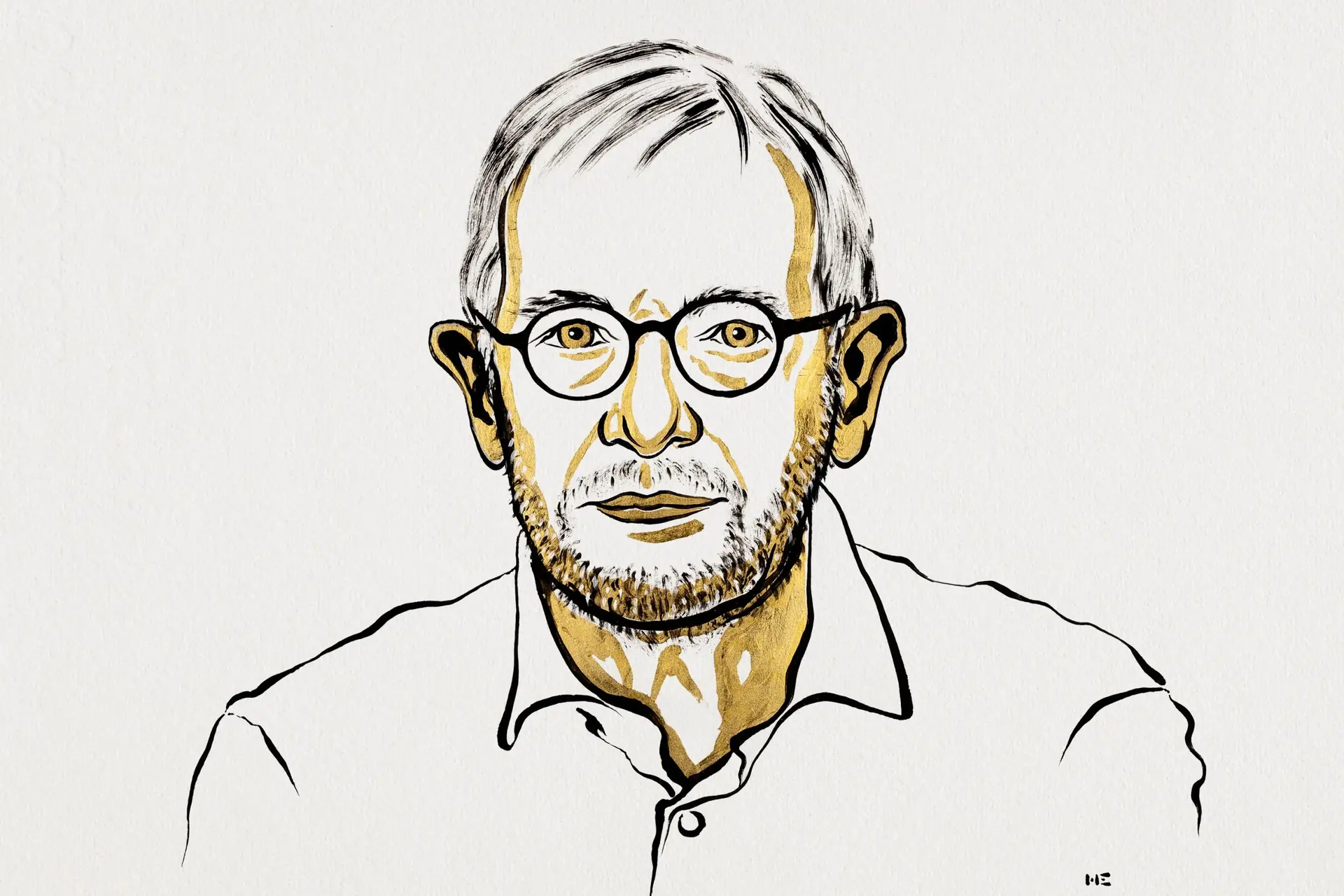
The 2026 Nobel Prize in Physics goes to one person this year. On Tuesday, the Royal Swedish Academy of Sciences awarded it to Francis Halzen "for decisive contributions to the IceCube Neutrino Observatory and the discovery of high-energy neutrinos of astrophysical origin."
Halzen was born in Belgium in 1944 and is a US citizen. He is a physics professor at the University of Wisconsin–Madison and the principal investigator of IceCube, the largest neutrino detector in the world.
A telescope made of ice
Neutrinos are often called "ghost particles." Billions of them pass through your body every second, and almost none of them interact with anything. Detecting them takes an enormous volume of clear, dark material, plus a lot of patience.
Halzen's solution was the ice sheet at the South Pole. IceCube has 5,160 light sensors on 86 cables, frozen into holes drilled up to 2.5 km deep. Together they turn a full cubic kilometre of ice into a detector. On the rare occasions a neutrino hits the ice, it gives off a faint flash of light, and the sensors record it.
Halzen started working on neutrino astronomy in the mid-1980s. He tested the concept first with a smaller precursor experiment called AMANDA. In an interview last year he called the idea "cute" when it started, and said the team's attitude was simply to study the ice, build a hot-water drill and see whether it worked. It worked. IceCube has been running at full capacity since 2011.
What it found
In 2013, IceCube reported the first high-energy neutrinos from outside our solar system. Physics World named it the Breakthrough of the Year. In 2018, the collaboration traced a single neutrino to a blazar about 4 billion light-years away. It was the first time anyone had pinned a high-energy neutrino to a specific source in space, and Science listed it among its top 10 breakthroughs of the year.
These results opened a new way of looking at the universe. Astronomers can now study the most violent objects in space using particles that light can't replace.
Japan's part in it
IceCube is an international collaboration, and Japan has been part of it from early on. Chiba University's International Center for Hadron Astrophysics has been a key member for two decades. Professor Aya Ishihara's group spotted neutrinos with around a quadrillion times the energy of visible light in 2012. They were the first ever seen at that energy.
The work is ongoing. Earlier this year, IceCube finished a major upgrade at the South Pole. About 40% of the new sensors are D-Eggs, which Chiba designed and built over more than a decade. Ishihara was on the team that installed them in the ice.
The Nobel announcements continue Wednesday with chemistry. Monday's prize in physiology or medicine went to Karl Deisseroth, Peter Hegemann and Georg Nagel for optogenetics.