Finance
Asian Markets Rocked by Steep Selloff as Trump's Iran Ultimatum Deepens Crisis
4 min read
By WhitesWolf1
Asian equities suffered their worst session in weeks on Monday as investors fled risk assets after U.S. President Donald Trump issued a 48-hour ultimatum to Iran, demanding the reopening of the Strait of Hormuz or facing strikes on its energy infrastructure. The escalation now entering its fourth week, sent shockwaves across the region, with no clear off-ramp in sight.
Market Snapshot
Nikkei 225 (Japan): 51,511.75 (-3.5%)
Kospi (South Korea): 5,404.77 (-6.5%)
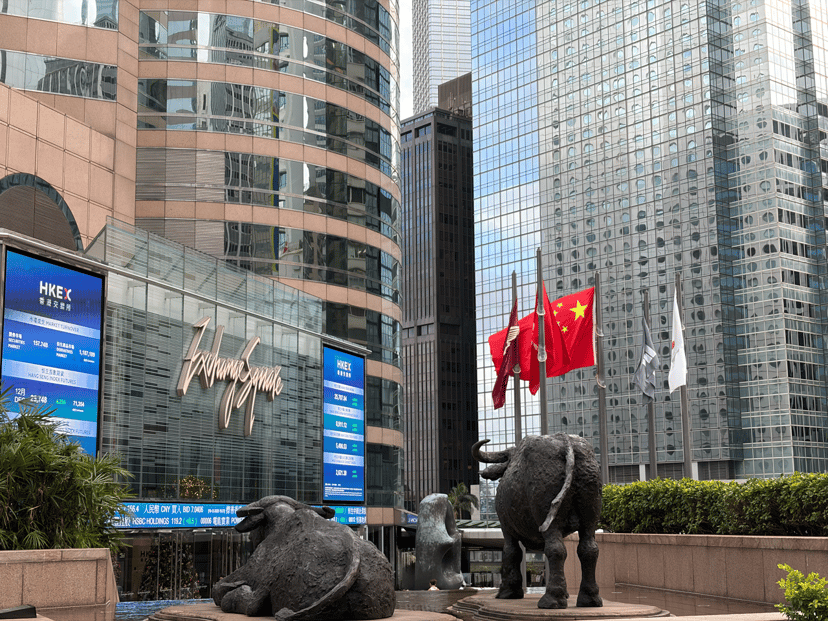
Hang Seng (Hong Kong): 24,250.44 (-4.1%)
Shanghai Composite (China): 3,806.29 (-3.8%)
Taiex (Taiwan): 32,722.50 (-2.5%)
S&P/ASX 200 (Australia): 8,365.90 (-0.7%)
South Korea's Kospi was the session's biggest casualty, plunging over 6.5% and triggering a brief trading halt after the Kospi 200 futures index fell more than 5%. Japan's Nikkei 225 extended losses from the prior session, shedding 3.5%. Hong Kong's Hang Seng slid 4.1%, while the Shanghai Composite dropped 3.8%. Taiwan's Taiex fell 2.5%, and Australia's S&P/ASX 200, now approaching correction territory after three consecutive weeks of losses, declined 0.7%.
Trump's 48-Hour Deadline
The selloff was ignited by a Truth Social post from President Trump late Saturday, warning the United States would "obliterate" Iran's power plants if the Strait of Hormuz, a critical chokepoint for roughly 20% of global oil shipments was not fully reopened within 48 hours. Tehran responded swiftly, threatening to target U.S. and Israeli energy and infrastructure assets across the region.
"Trump's ultimatum and Iran's retaliatory warnings point to a widening conflict that keeps energy disruption and market volatility elevated with no clear off-ramp in sight," said Ng Jing Wen, analyst at Mizuho Bank in Singapore.
Oil Surges, Gold Stumbles
Energy markets reflected the tension. Brent crude held near $112–$113 per barrel on Monday, with Goldman Sachs raising its forecast to an average of $110 for March and April, up from a prior estimate of $98. U.S. West Texas Intermediate (WTI) crude hovered around $98–$100 per barrel. Both benchmarks have surged dramatically since the conflict began on Feb. 28, when Brent was trading at just $72.48 and WTI at $67.02.
The spread between Brent and WTI widened past $14 a barrel, the largest gap in years, reflecting heightened seaborne supply risk.
In a striking reversal, gold prices tumbled roughly 5% on Monday, extending what has been gold's worst week in over 40 years. A surging U.S. dollar and rising expectations for potential Federal Reserve rate hikes weighed heavily on the precious metal, which had closed Friday at $4,623.93 per ounce after a 4.19% drop.
Rate Hike Fears Replace Cut Expectations
The conflict's inflationary impact has dramatically reshaped monetary policy expectations. Before the war, traders had been pricing in at least two Fed rate cuts in 2026. Now, markets are beginning to bet on small chances of rate hikes, a seismic shift in sentiment. The 10-year U.S. Treasury yield jumped to 4.38% on Friday from 3.97% before the conflict began.
Central banks in Europe, Japan, and the United Kingdom recently held rates steady, while the Reserve Bank of Australia raised its benchmark rate for the second consecutive time to 4.1% last week, reflecting persistent inflation pressures.
Currencies and Broader Fallout
The U.S. dollar strengthened broadly on safe-haven demand and rate-hike speculation, rising to 159.53 yen from 159.22. The euro slipped to $1.1526. Asian currencies came under pressure as capital flowed toward the dollar, compounding losses for regional equity markets.
Australia's S&P/ASX 200 is now on the brink of a formal correction, down roughly 10% from its March peak with energy stocks as the lone bright spot amid the broader rout. Financials led declines across Australian equities.
China Seeks to Reassure
Amid the turmoil, Chinese Premier Li Qiang used a forum appearance to signal Beijing's openness to trade, stating that China "does not seek a trade surplus" and will continue to advance economic opening. The remarks came as President Trump's planned visit to China originally slated for late March was postponed by about a month amid the Middle East crisis.
Looking Ahead
The 48-hour deadline expires Tuesday morning Asia time, and markets are bracing for potential further escalation. Analysts at Macquarie University warned that "week four is when you see peak uncertainty," and traders appear to be in "sell now, ask questions later" mode.
With Brent crude up more than 50% since the war began, the risk of demand destruction and recession is growing. Petrochemical producers in South Korea, Japan, Southeast Asia, and China are expected to begin cutting operations as energy costs bite.
On Wall Street, the S&P 500 closed its fourth consecutive losing week on Friday, dropping 1.5% to 6,506.48. The Dow fell 1%, and the Nasdaq slid 2%. U.S. futures signaled flat-to-lower opens headed into the European session.