AI
OpenAI Unveils Ad-Supported Model for Free and Go Tiers in Strategic Monetization Shift
3 min read
By Timmy
OpenAI announced on Thursday it will begin testing advertisements within its flagship ChatGPT platform for users in the United States. The initiative, detailed in a company blog post, will bring sponsored messages to users of the free service and the newly expanded low-cost “Go” subscription tier in the coming weeks.
The decision represents a fundamental strategic pivot for the artificial intelligence leader as it seeks to monetize its vast user base. With over 800 million weekly active users globally and approximately 95% of them using the service without a paid subscription, the company faces the immense challenge of funding unprecedented, long-term infrastructure investments while maintaining broad access to its technology.
A Delicate Balance: Access, Revenue, and Trust
This advertising test will roll out to adult users in the US first, crucial to its mission to expand affordable AI reach. The company stated that any advertising strategy must respect the trust relationship established between users and ChatGPT.
OpenAI has signed multi-year infrastructure agreements with partners including Microsoft and Oracle, reportedly totaling approximately $1.4 trillion over about eight years. These commitments represent forward-looking capital investments designed to secure the high-level computing power needed for future AI development. The new advertising revenue stream is seen as a key component in building a sustainable economic model, complementing subscription and enterprise services.
How Advertising Will Work in Conversation
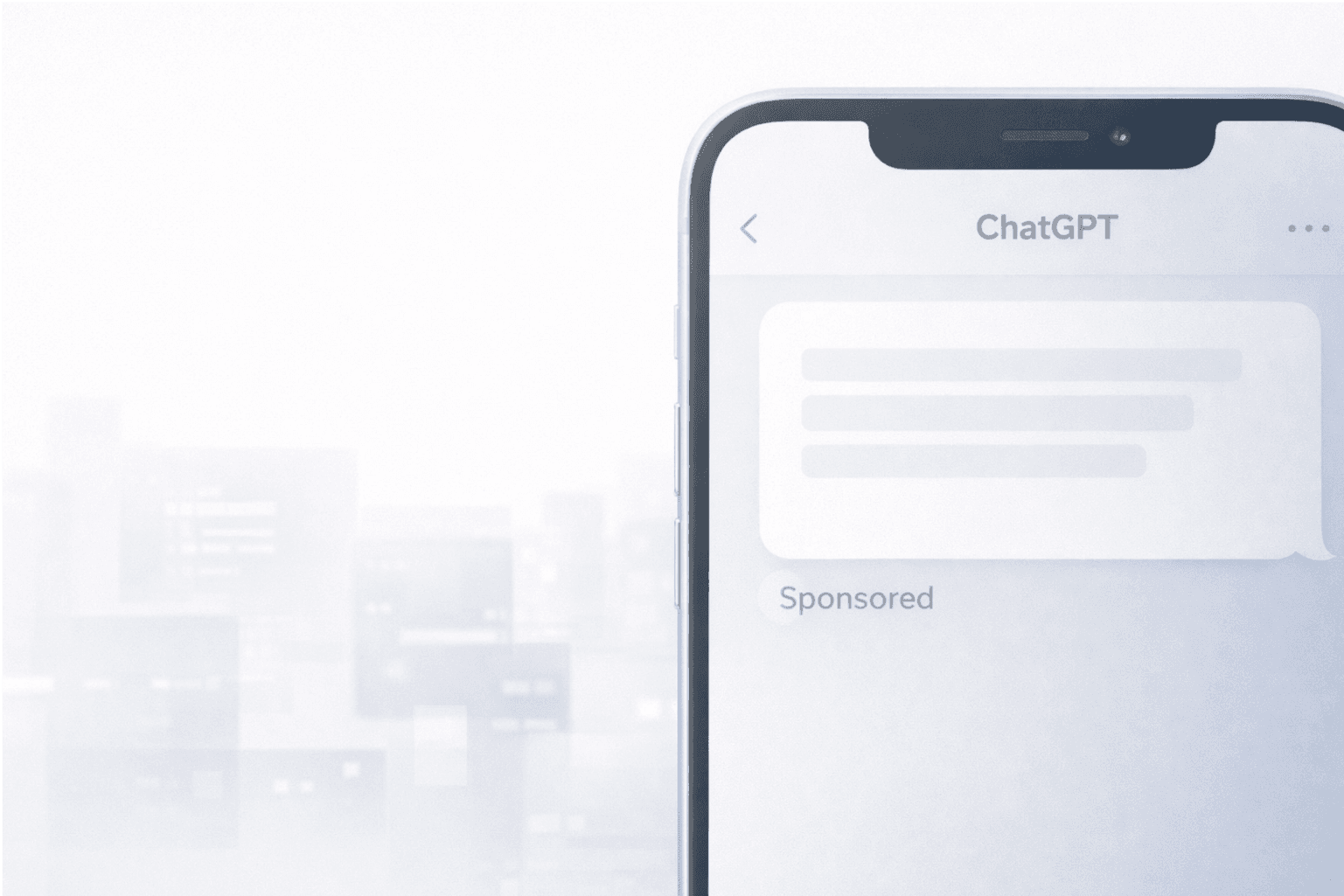
According to the official announcement, advertisements will be clearly marked as “Sponsored” and will appear at the bottom of ChatGPT’s response window. The company plans to use contextual matching, displaying ads related to the topic of conversation such as showing flight deals when a user is planning a trip.
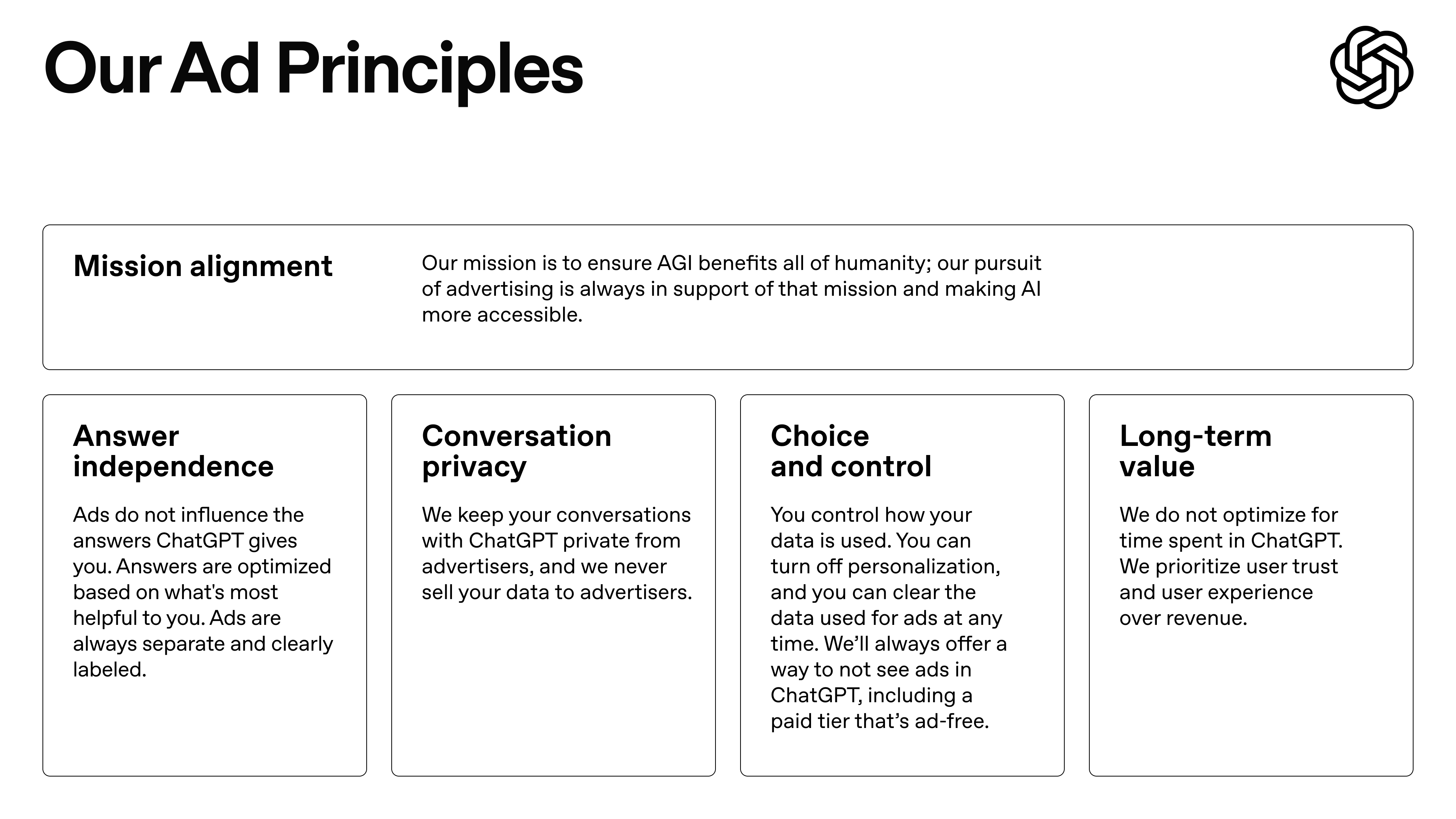
OpenAI has emphasized several core principles to maintain user trust:
Answer Independence: The company states that the AI’s responses will be generated independently and will not be influenced by advertising partnerships.
Privacy Commitment: OpenAI asserts it will “never” sell individual user chat data or conversation history to advertisers. Marketing partners will receive only aggregated, anonymized performance metrics.
User Control: Individuals will have the option to disable ad personalization based on their chat history. Furthermore, ads will not appear during conversations about sensitive, regulated topics including health, mental health, or politics.
Tiered Experience: The company’s premium subscription plans: ChatGPT Plus, Pro, and Enterprise will remain completely free of advertisements.
The Two-Tier Future: Free with Ads, Premium for Privacy
The launch coincides with the U.S. debut of the ChatGPT Go plan, a budget subscription tier priced at $8 per month that offers enhanced features like file upload and image generation. Initially, both the free tier and the Go plan in the U.S. will see advertisements.
This creates a clear delineation in OpenAI’s product strategy: an accessible, ad-supported experience for the majority of users, and a premium, ad-free environment for paying subscribers and business clients.
"The compute and capital requirements of running frontier AI models are defining a new scale for technology companies," said an industry analyst familiar with the infrastructure market. "Monetizing the free tier through highly controlled, privacy-first advertising is a logical and anticipated step toward long-term viability. The key test will be whether users perceive the ads as a reasonable trade for continued free access."
The success of this initial U.S. test will likely determine the global rollout of the advertising model. OpenAI has stated it will proceed cautiously, using feedback to refine the approach. As the AI industry matures, OpenAI’s experiment will be closely watched as a bellwether for how the public adopts—and adapts to—a new era of conversational AI, funded not just by subscriptions, but by sponsored messages woven into the dialogue.